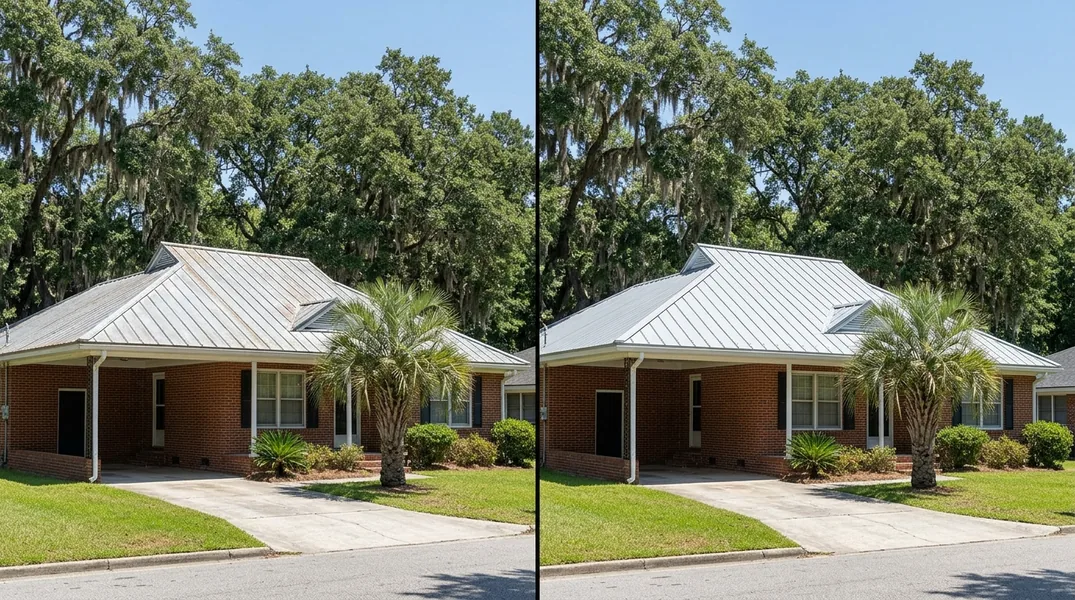
Why Charleston Humidity Makes Your Roof Work Overtime
If you live in Charleston, you already know that summer here is not just hot, it is heavy. The air holds moisture like a warm sponge, and that humidity does more than make the afternoon feel sticky. It quietly drives up the amount of heat your home absorbs through the roof, which means your air conditioner has to run longer and harder to keep the interior comfortable. Traditional asphalt shingles absorb and store solar heat, then radiate it downward into your attic long after the sun goes down. In a humid climate, that trapped heat combines with moisture to create a sauna-like attic environment that stresses your HVAC system and your energy budget.
The good news is that the roof over your head can be part of the solution instead of the problem. A reflective metal roof is designed to bounce solar radiation back into the sky rather than soaking it up, and that single change can make a measurable difference in how hard your cooling system works. For homeowners researching energy efficient roofing options in the Lowcountry, metal is increasingly the first choice, not just for durability but for the way it handles heat and humidity together.
How a Cool Roof Works in South Carolina's Climate
The term cool roof south carolina homeowners hear most often refers to roofing materials engineered to reflect sunlight and release absorbed heat efficiently. Metal roofs excel at both. A properly coated metal panel can reflect a large share of the sun's energy, and because metal sheds heat quickly, it does not stay hot the way asphalt does. That means less heat transfers into your attic during the peak of the day and less residual heat radiates into your living space in the evening. In a place like Mount Pleasant, where afternoon sun beats down on roofs for months on end, that difference shows up on your monthly power bill.
What makes a cool roof especially valuable here is how it interacts with humidity. When an attic stays cooler, the dew point dynamics inside that space change, and you get less condensation on the underside of the roof deck and on ductwork. Less condensation means less opportunity for mold, mildew, and the slow deterioration of insulation and wood framing. A reflective metal roof does not eliminate humidity, but it removes one of the biggest sources of heat-driven moisture stress in a Lowcountry home.
Metal Roof Insulation: The Layer That Makes the Difference
A reflective surface is only half the story. The other half is metal roof insulation, which controls how much heat moves between the roof and your living space. Many metal roof systems use a layer of underlayment or a thermal break, sometimes in the form of a radiant barrier or rigid insulation board, installed beneath the panels. This layer slows heat transfer and helps prevent the metal from acting like a frying pan over your attic. When insulation and reflectivity work together, the cooling load on your home drops noticeably, and your air conditioner gets to cycle off instead of running continuously through July and August.
Proper installation matters as much as the materials. A metal roof that is installed without attention to ventilation and underlayment can underperform, and in a humid climate that can lead to trapped moisture. That is why working with an experienced local installer is worth the investment. If you are considering Metal Roof Installation and want to understand how insulation fits into the system, a free estimate is the right place to start. A professional assessment will tell you what your current roof is doing and what a cool metal system could do differently.
Reduce Cooling Costs in Charleston: What Homeowners Can Realistically Expect
Homeowners often ask how much a metal roof will actually save. The honest answer is that savings vary based on your home's size, attic ventilation, existing insulation, and how you use your HVAC system. That said, the physics are straightforward: a cooler attic means a cooler house, and a cooler house means the air conditioner runs less. Many Charleston-area homeowners report meaningful reductions in summer cooling costs after switching to a reflective metal roof, especially when the project includes upgraded underlayment and attention to attic ventilation. The savings compound over the life of the roof, which for metal can span decades.
It also helps to think beyond the monthly bill. A metal roof reduces heat gain, which reduces the wear and tear on your HVAC equipment. That can extend the life of your air conditioner and delay expensive replacements. When you factor in the durability of metal and its resistance to wind and moisture, the total cost of ownership often looks better than asphalt shingles over a twenty or thirty year horizon. For a closer look at what a project might involve, you can review pricing and then request a free estimate tailored to your home.
Standing Seam Metal Roofing Near Me: Choosing the Right System
If you search for Standing Seam Metal Roofing near me in the Charleston area, you will find several options, but not all systems are equal for this climate. Standing seam panels have raised seams that hide fasteners and create a clean, water-shedding surface, which is ideal for a region that sees heavy summer thunderstorms and tropical weather. The concealed fasteners also reduce the risk of leaks that can plague exposed-fastener panels over time. When paired with a reflective finish and proper insulation, standing seam is one of the most effective cool roof systems available for Lowcountry homes.
Another option worth discussing with a local contractor is Metal Roof Over Shingles (Retrofit), which can sometimes be installed over an existing shingle roof. This approach can save on tear-off costs and landfill waste, but it requires a careful evaluation of your roof structure and ventilation. Not every home is a candidate, and in a humid climate the details matter. A professional inspection will tell you whether a retrofit or a full Metal Roof Replacement is the better path for your property.
Why Local Expertise Matters for a Cool Roof in the Lowcountry
Metal roofs are not new, but installing them well in a humid coastal climate takes local knowledge. Details like attic ventilation, underlayment selection, flashing at penetrations, and fastener placement all influence how the roof performs over time. A contractor who works in North Charleston and Summerville week after week understands how local sun angles, storm patterns, and humidity affect a roof system. That experience translates into a better installation and fewer surprises down the road.
Charleston Metal Roofing serves homeowners across the Charleston area with metal roof systems designed for this climate. If you are ready to explore how a cool metal roof could lower your cooling costs and improve your home's comfort, call (843) 804-4445 or request a free estimate today. A short conversation can help you decide whether metal is the right fit for your home and what the next step looks like.
Looking for a professional metal roofing contractor in Charleston? Charleston Metal Roofing responds fast for all your metal roofing needs.
Get a Free QuoteOur services: Metal Roof Installation · Standing Seam Metal Roofing · Metal Roof Replacement