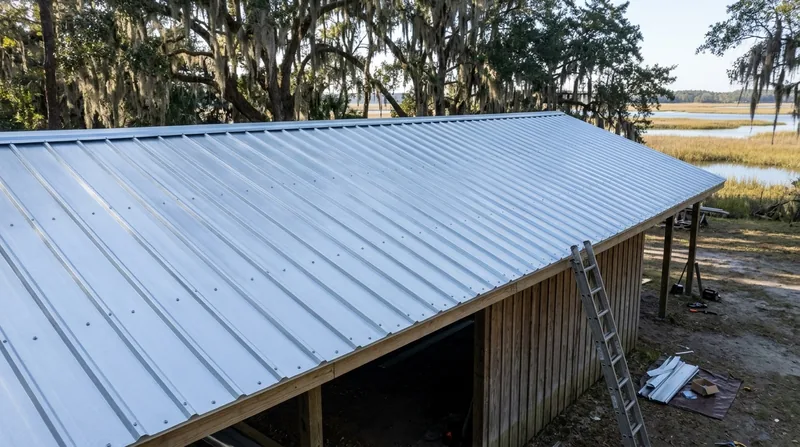




Corrugated & Ribbed Panel Roofing in Charleston: The Lowcountry Workhorse Done Right
Charleston's building stock runs from 18th century single houses with side piazzas on the historic peninsula to raised beach cottages on Folly Beach and 1990s stucco subdivisions across Mount Pleasant and Goose Creek. On a low-lying peninsula between the Ashley and Cooper rivers, exposed-fastener metal is the profile that has kept Lowcountry roofs watertight for generations. Corrugated & Ribbed Panel Roofing in Charleston is our bread and butter: 5V crimp, corrugated, and R-panel systems installed with the screw patterns and closures that stand up to salt air, afternoon thunderstorms, and hurricane-season wind. We install, repair, and replace panels on homes, porches, carports, barns, and workshops. If your roof is leaking at a fastener line or you are weighing exposed-fastener against a concealed system, start with our metal roof installation service for the full picture.
Why Exposed-Fastener Metal Makes Sense on Charleston Roofs
The Lowcountry throws a specific combination at a roof: hot humid summers, salt air off the harbor and the Atlantic, heavy afternoon rain, and wind-driven storms from June through November. Corrugated and ribbed panels shed that water fast because the ribs channel it down and away, and the reflective finishes cut attic heat in July and August. The same profile has been on Charleston porches and outbuildings for a century, which tells you something about how it handles this climate.
- Salt air resistance matters most within a few miles of the water, so we spec panels and fasteners for the exposure level of the property.
- Wind uplift is the real test during hurricane season, and the screw pattern and panel gauge decide whether a roof stays put.
- Reflective color keeps a West Ashley or James Island ranch house cooler under a Lowcountry sun.
- Walkability and repairability mean a single damaged panel or stripped screw does not require tearing off the whole roof.
- Cost per square foot sits well below standing seam, which matters on carports, barns, and workshops where the budget is tight.
For outbuildings and agricultural structures, this is the same system we run through our commercial and agricultural metal roofing work.
Key info: A 5V-crimp porch roof on a Wagener Terrace bungalow and an R-panel barn roof in Ravenel are not the same job. The panel gauge, screw type, and closure details change with the span and the wind exposure, so we spec each one on site.
How We Install Corrugated and Ribbed Panels Around Charleston
We start by looking at what is under the existing roof: decking condition, old fastener rust, and whether the structure can take a recover. Then we lay out the panels so the ribs run with the prevailing weather, set the screw pattern to the wind zone, and close every ridge, hip, and gable end so wind-driven rain cannot find a way in. On the historic peninsula and in HOA-governed subdivisions, we confirm the profile and color against design review before a single panel is ordered.
- We inspect the deck and framing and photograph anything that needs repair before the panels go on.
- We pull the roofing permit through the correct jurisdiction and schedule the inspection.
- We install underlayment and then set the panels with the specified screw pattern and closures.
- We flash chimneys, skylights, and wall intersections with formed metal, not caulk.
- We walk the roof with you at the end and hand over the fastener and finish documentation.
If you are comparing profiles, our standing seam page explains where the concealed-fastener system wins and where it does not.
Key info: On a raised beach cottage on the Isle of Palms, we replaced a rusted 5V-crimp roof and reset the screws to the current wind-uplift pattern. The homeowner's insurance inspector signed off on the documentation, which is the kind of record that helps at renewal time.
Panel Options: Matching the Profile to the Building
Not every Charleston roof wants the same panel. A historic rowhouse near Rainbow Row has design-review constraints, a Folly Beach cottage wants maximum wind performance, and a Goose Creek workshop wants the most coverage for the money. Here is how the main approaches line up.
| Approach | Description | Best for |
|---|---|---|
| 5V crimp panels | Classic Lowcountry profile with five shallow V-ribs and exposed fasteners. | Porches, carports, and historic-district outbuildings. |
| Corrugated panels | Wavy profile with strong water-shedding and a familiar agricultural look. | Barns, sheds, and workshops across Ravenel and Moncks Corner. |
| R-panel (ribbed) | Deeper ribs, wider coverage, and higher wind uplift ratings. | Residential re-roofs in Mount Pleasant and Summerville. |
| Recover over existing shingles | Panels set on battens over the old roof where code allows it. | Homes where tear-off cost is the deciding factor. |
| Repair and re-fastening | Replacing stripped or rusted screws and sealing the fastener line. | Older roofs before a leak turns into deck damage. |
Each option carries a different price and a different lifespan, so the choice usually comes down to the building and the budget, not the panel name.
Corrugated & Ribbed Panel Roofing Cost in Charleston: What to Expect
Most exposed-fastener work in the Charleston area starts around $5.50 per square foot installed, and that figure is a starting point, not a promise. Panel gauge, color finish, roof pitch, and how much flashing the job needs all move the number. A simple carport in Hanahan sits near the low end, while a steep, cut-up roof on a historic home near South of Broad lands well above it.
- Roof size and pitch drive the labor, and a steep pitch slows every panel set.
- Access matters on tight peninsula lots where a truck cannot park next to the house.
- Deck repairs found after tear-off add cost, and we photograph them before we proceed.
- Flashing and penetrations around chimneys and skylights are where the detail time goes.
- Panel gauge and finish separate a budget job from a 30-year roof.
We recommend getting two or three written estimates so you can compare scope, not just the bottom line. Our full pricing overview breaks down how we build an estimate.
Hiring a Corrugated & Ribbed Panel Roofing Contractor Near Me in Charleston
Charleston has plenty of roofers, and the difference between a roof that lasts 30 years and one that leaks in year three is usually the installation detail, not the panel. Before you sign, check that the contractor is licensed and insured in South Carolina, ask for local references on metal work specifically, and confirm who pulls the permit. On the peninsula, historic district review can restrict profile and color, and HOA design review adds another layer in places like Daniel Island.
- Get at least two written estimates that itemize panels, fasteners, and flashing.
- Ask to see a recent exposed-fastener roof the contractor installed in the Lowcountry.
- Confirm the permit is pulled in the correct jurisdiction and that inspections are included.
- Check HOA or historic district approval requirements before ordering panels.
If a contractor will not put the scope in writing, keep looking. You can reach us through our contact page when you are ready to compare.
Key info: Roofing permits and inspection thresholds vary by jurisdiction across Charleston County and the surrounding towns. Always confirm the current rules with the local building department before work begins, because the requirements are not the same from one municipality to the next.
Corrugated & Ribbed Panel Roofing in Charleston: Pricing Guide
| Service | Price | Details |
|---|---|---|
| Corrugated & ribbed panel installation | Starting at $5.50/sq ft | Includes panels, underlayment, fasteners, and standard closures on an accessible roof. |
| Recover over existing shingles | Starting at $6.50/sq ft | Panels set on battens over one existing layer, subject to code limits and deck condition. |
| Panel repair and re-fastening | Starting at $450 | Covers replacing rusted screws and sealing fastener lines on a typical residential roof section. |
| Complex or steep-pitch roof | On estimate | Cut-up roofs, historic-district profiles, and heavy flashing work need an on-site look first. |
| Travel | Included | In Charleston and surrounding areas, with no separate call-out or mileage fee. |
| Estimate | Free | Response within 24 hours at (843) 804-4445, with no obligation to book. |
Indicative pricing, the exact cost depends on square footage, finish, and site access. Free personalized estimate within 24h at (843) 804-4445.


